


Introduction
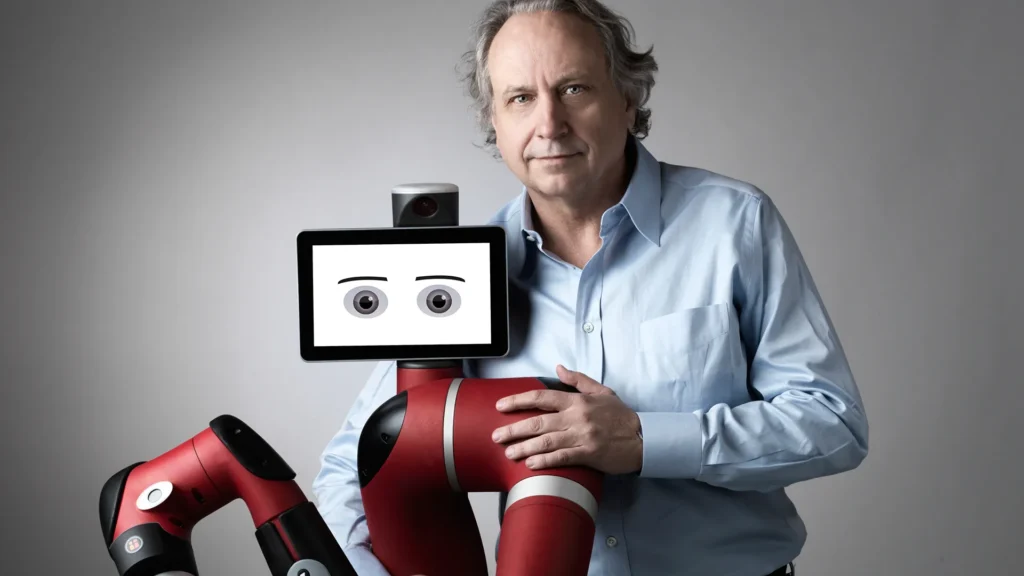
Few figures have shaped modern robotics as profoundly as Rodney Brooks. As a pioneering roboticist and co-founder of iRobot, the company behind the iconic Roomba vacuum cleaner, Brooks helped bring robots out of research labs and into everyday homes. Yet, despite decades of innovation, Brooks remains one of the most outspoken voices warning against exaggerated expectations around artificial intelligence and robotics.
According to a New York Times profile, the Rodney Brooks robots Roomba story is not one of overnight breakthroughs, but of slow, steady progress — and hard limits. As AI hype dominates headlines, Brooks argues that physical robots face challenges that software alone cannot solve. This article for Epsy Magazine explores Brooks’ philosophy, the true legacy of Roomba, and why robotics may advance more cautiously than many expect.
Source:
The New York Times
https://www.nytimes.com/2025/12/14/business/rodney-brooks-robots-roomba.html
Who Is Rodney Brooks and Why He Matters
Rodney Brooks is widely regarded as one of the most influential roboticists of the past half-century.
His impact includes:
-
Co-founding iRobot, maker of the Roomba
-
Leading robotics research at MIT
-
Challenging traditional AI models based on abstract reasoning
-
Promoting embodied intelligence — robots learning through physical interaction
The Rodney Brooks robots Roomba legacy reshaped how machines navigate the real world rather than simulated environments.
The Roomba: A Breakthrough Built on Simplicity
Roomba’s success surprised many who expected advanced home robots to resemble science fiction.
Key design principles included:
-
Simple sensors rather than complex vision systems
-
Randomized movement instead of detailed mapping
-
Robustness over elegance
-
Affordability for mass adoption
Rather than attempting human-like intelligence, Roomba focused on completing one task reliably: cleaning floors. That restraint was key to its commercial success.
Why Robotics Is Harder Than Software AI
Brooks frequently emphasizes a fundamental distinction: robots exist in the physical world.
Challenges include:
-
Unpredictable environments
-
Mechanical wear and failure
-
Energy limitations
-
Safety requirements around humans
Unlike chatbots or recommendation systems, robots must handle friction, gravity, and real-time physical consequences. The Rodney Brooks robots Roomba perspective highlights why progress in robotics cannot mirror the rapid scaling seen in software AI.
The Gap Between AI Hype and Reality
In recent years, AI breakthroughs have fueled speculation about autonomous robots replacing human labor.
Brooks pushes back on this narrative, noting:
-
Language models do not equate to physical understanding
-
Intelligence in software does not transfer easily to machines
-
Human environments are far more complex than simulations
He argues that expectations set by AI marketing risk misleading policymakers, investors, and the public.
Why Humanoid Robots Remain Elusive
Despite massive investment, humanoid robots remain rare outside labs and demos.
Obstacles include:
-
Balance and mobility challenges
-
High costs of sensors and actuators
-
Safety risks in shared spaces
-
Limited real-world utility
Brooks believes task-specific robots — like Roomba — will continue to outperform general-purpose humanoids in practical applications.
What Brooks Thinks the Future of Robots Looks Like
Rather than dramatic leaps, Brooks predicts gradual expansion of robotics into niche roles.
Likely areas of growth include:
-
Warehousing and logistics
-
Agriculture and food production
-
Medical assistance tools
-
Industrial inspection
Each application requires tailored solutions rather than one-size-fits-all intelligence.
Lessons for Investors and Tech Leaders
The Rodney Brooks robots Roomba story offers important lessons for technology investors.
Key takeaways include:
-
Real-world robotics demands patience
-
Hardware innovation scales slower than software
-
Overpromising damages trust
-
Practical utility beats flashy demos
Brooks’ career demonstrates that success often comes from narrowing scope, not expanding ambition.
Why This Matters Beyond Robotics
Robotics influences broader conversations about automation, labor, and economic change.
Understanding its limits helps:
-
Policymakers avoid premature regulation
-
Businesses make realistic investment decisions
-
Workers prepare for gradual, not sudden, disruption
Misjudging robotics timelines can lead to costly misalignment between expectation and reality.
Readers interested in AI realism, technology history, and innovation economics can explore related analysis on Epsy Magazine, including artificial intelligence trends, automation debates, and emerging tech insights.
A Counterbalance to AI Optimism
While Brooks is not anti-technology, he serves as a necessary counterweight to unrestrained optimism.
His message is consistent:
-
Intelligence is more than computation
-
Physical interaction changes everything
-
Progress requires humility and experimentation
The Rodney Brooks robots Roomba narrative underscores the value of grounded engineering over futuristic promises.
Conclusion
Rodney Brooks’ influence on robotics extends far beyond the Roomba. His insistence on realism, physical intelligence, and incremental progress has shaped an industry often tempted by hype. As artificial intelligence continues to evolve rapidly in software, robotics remains anchored to the complexities of the real world.
Understanding this distinction is crucial for anyone watching the future of technology unfold. The success of Roomba did not come from building a human-like robot — it came from building the right robot for the job.
At Epsy Magazine, we continue to highlight the thinkers and technologies shaping innovation with clarity, context, and credibility.